
If you’re learning to drive, you’ve probably wondered: can learners drive on the motorway? Motorways can seem intimidating, with higher speeds, multiple lanes and a constant flow of traffic, so it’s easy to assume they’re only for more experienced drivers. But that’s not always the case.
In recent years, the rules around motorway driving for learners have changed. Learners can now drive on the motorway before passing their test. Knowing when this is allowed and how it works can be helpful if you’re just starting lessons or thinking ahead to test day.
In this guide, we’ll cover the key rules, what to expect during lessons, and share some practical motorway driving tips to help you feel more confident when the time comes.

Can learners drive on the motorway during lessons?
If you’re unsure what to expect, the sections below walk you through the key points step by step, so you can feel more prepared before heading onto faster roads.
- Can You Drive on the Motorway as a Learner?
- Do You Go on the Motorway on Driving Lessons?
- Why Motorway Experience Matters for New Drivers
- Motorway Rules That Learners Must Follow
- Motorway Driving Tips
- What happens if you never drive on the motorway before passing?

Can You Drive on the Motorway as a Learner?
The short answer is yes. Learner drivers can drive on the UK motorway, but there are a few important rules to follow.
The law changed in 2018 to allow learner drivers to gain motorway experience before passing their test. Before that, learners were not allowed to drive on motorways at all, which meant many drivers encountered them for the first time after passing their test. As you can imagine, that first motorway journey could feel quite daunting.
The rules introduced in 2018 mean learner drivers can now drive on motorways under specific conditions. This change aims to provide them with proper guidance, boosting their confidence and safety on faster roads.
However, learners cannot simply drive onto the motorway whenever they want. There are a few conditions that must be met:
- You must be accompanied by an approved driving instructor.
- The car must have dual controls.
- You must be driving as part of a structured lesson.
Motorway driving lessons are only permitted with an approved driving instructor in a dual-controlled car. You cannot practise on motorways with friends or family, regardless of whether other legal supervision requirements are met.
The goal is to ensure learners receive proper guidance while experiencing motorway conditions. An instructor can help you deal with things like lane discipline, joining and leaving the motorway safely, and managing higher speeds.
If you’re currently taking driving lessons in Leicester, it’s worth asking your instructor whether motorway practice is included in your learning plan.

Do You Go on the Motorway on Driving Lessons?
It’s a common question for learners, especially as motorway driving can feel like a big step.
The answer is that it depends on your instructor, your progress and your confidence level.
Motorway lessons are optional, so you do not have to drive on the motorway before your test unless you and your instructor feel you are ready. They are also not part of the practical driving test itself.
That said, plenty of instructors encourage learners to experience motorway driving before passing. It can be a really valuable part of your training.
Typically, motorway lessons happen later in your learning journey once you’ve mastered the basics. Before heading onto a motorway, you’ll usually need to be confident with:
- Lane positioning
- Mirror checks and observations
- Speed control
- Safe merging at junctions
- Roundabouts and dual carriageways
Dual carriageways are often a stepping stone to motorway driving. They share some similarities, but motorways often have more lanes, higher traffic, and stricter rules.
When you reach that stage, your instructor might plan a motorway lesson so you can practise these skills in a real motorway environment.
If you’re taking driving lessons in Leicester, your instructor may include motorway driving later on once you’re confident with the basics and ready to handle higher-speed roads.

Why Motorway Experience Matters for New Drivers
Motorways are built for large volumes of traffic. In many ways, they can be easier to drive on than busy town roads. There are no pedestrians, no traffic lights, and fewer hazards or sharp turns.
However, the speed and traffic flow can feel overwhelming if you have never experienced it before.
That’s why motorway lessons can be so valuable. They give learners the chance to experience motorway conditions with a qualified instructor sitting beside them, ready to guide them through any situation.
Motorway lessons can help you learn how to:
- Join the motorway using a slip road.
- Match the speed of traffic when merging.
- Choose the correct lane.
- Overtake safely.
- Leave the motorway correctly.
These are skills that many new drivers struggle with after passing their test.
The UK has an extensive motorway network connecting cities and regions across the country. In fact, there are dozens of major motorways forming part of the national road system, including the M1, M25, and M6, which are among the UK’s main motorways.
If you plan to travel longer distances in the future, motorway confidence will quickly become an essential skill.
Some major routes in the UK have toll bridges or tunnels. These are rare on motorways but found on some crossings or connecting roads. It’s helpful to understand toll systems before travelling further afield.

Motorway Rules That Learners Must Follow
Although learners can legally drive on motorways, strict rules are in place to ensure safety.
Here are the key rules every learner should know:
- You must have a qualified instructor: Learner drivers can only go on the motorway during lessons with a DVSA-approved driving instructor. This means you cannot practise motorway driving with friends or family members, even if they would normally be allowed to supervise you. This ensures that learners receive professional guidance in a fast-moving environment.
- The car must have dual controls: The vehicle used must be fitted with dual controls. This allows the instructor to intervene if necessary, for example, by applying the brake. Dual control cars are standard for professional driving lessons and are designed to make learning safer.
- It must be part of a lesson: Motorway driving must be part of an official lesson. Learners cannot drive on the motorway during private practice sessions. If you’re taking lessons with a driving school in Leicester, your instructor may suggest trying some motorway practice once you’re comfortable with the basics.
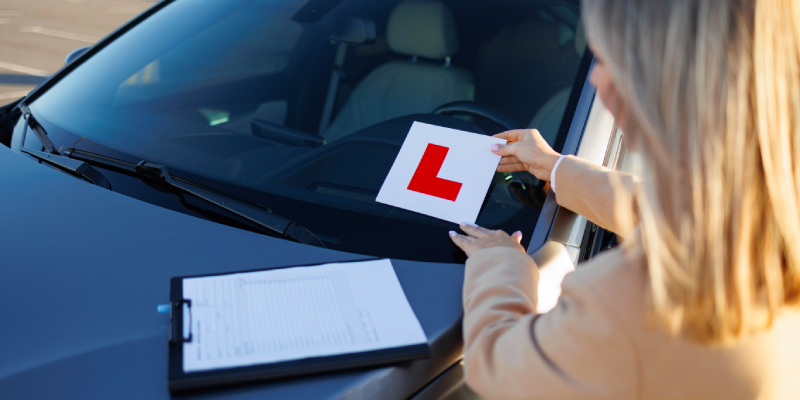
- You must display L plates: Just like any other driving lesson, the car must display L plates while you are on the motorway. This alerts other road users that you are still learning.
These rules help ensure motorway lessons remain safe and controlled for everyone involved.
Motorway Driving Tips
Motorways may look intimidating at first, but once you understand how they work, they can become one of the easiest types of roads to drive on. Here are some practical tips to make your first motorway experience much smoother.
1. Build Speed on the Slip Road:
When joining a motorway, the slip road gives you space to increase your speed before merging with traffic. Here are some things to remember:
- Many learners feel nervous about accelerating here, but it’s important to match the speed of vehicles already on the motorway. This makes merging much easier and safer.
- Your instructor will help you judge when to join.
2. Use Your Mirrors Constantly:
Observation is crucial on motorways. Traffic moves quickly, and situations can change quickly. You should regularly check:
- Your rear-view mirror
- Your side mirrors
- Your blind spot before changing lanes
Good mirror habits are one of the most important motorway skills.
3. Stick to the Left Lane Unless Overtaking:
Motorway lane discipline is simple but extremely important, make sure to:
- Drive in the left lane unless overtaking.
- Use the middle and right lanes only to pass slower vehicles.
- Once finished, return to the left lane when it is safe to do so.
This keeps traffic flowing smoothly.
4. Maintain a Safe Following Distance:
At higher speeds, stopping distances increase significantly. It is important to:
- Keep at least a two-second gap between you and the vehicle in front during dry conditions.
- In wet weather, this should be doubled to at least four seconds for safety.
5. Stay Calm and in Control:
One of the biggest motorway driving tips is to stay calm and keep the car under control at all times. You should avoid:
- Sudden braking
- Sharp steering
- Last-second lane changes.
Smooth, controlled driving makes your actions clearer to others and helps traffic flow safely.
Your instructor will guide you through these skills during your lesson, helping you build confidence step by step.

What Happens if You Never Drive on the Motorway Before Passing?
Some learners never experience motorway driving during lessons, especially if they live in areas far from major motorways. If that happens, don’t worry. Many drivers’ first experience of motorways is after passing their test.
However, it can feel like a big step if you’ve never done it before. That’s why some newly qualified drivers choose to take additional motorway lessons after passing.
These sessions are sometimes called Pass Plus or post-test motorway training. They help new drivers practise motorway skills without the pressure of a test.
Whether you practise before or after passing, gaining motorway experience early can help you become a safer driver overall.

The Key Things to Remember About Learner Motorway Driving
So, can learners drive on the motorway? Yes, they can. But only under the right conditions.
Since the rule change introduced in 2018, learner drivers have been allowed to gain motorway experience during their driving lessons. This helps prepare new drivers for real-world driving situations and reduces the stress many people used to feel when encountering motorways for the first time.
However, motorway driving for learners comes with strict rules. You must be with a qualified instructor, the car must have dual controls, and the journey must take place during an official lesson.
Motorway driving isn’t something you have to do before your test, but many instructors still encourage learners to try it if they’re ready. It gives you the chance to get used to higher speeds, practise choosing the correct lane and learn how to join faster-moving traffic safely.
If you’re feeling unsure about motorway driving, having the right support can make all the difference. At Drive 247 Leicester, our instructors can help you build confidence at your own pace, including introducing motorway driving when you’re ready. If you’re looking to get started, booking your lessons is a great first step.